
Mahabo Agricultural School
Before anything is built, there is a moment when a piece of land begins to reveal what it needs. In Madagascar, that moment started with six men from the surrounding community arriving on site, ready to help.

Some of them had been there on a previous visit and returned this time without being asked.
They cleared the ground, turned the earth, and waited patiently while the team moved from point to point across a site that was substantially greener and more alive than anyone had seen it before.
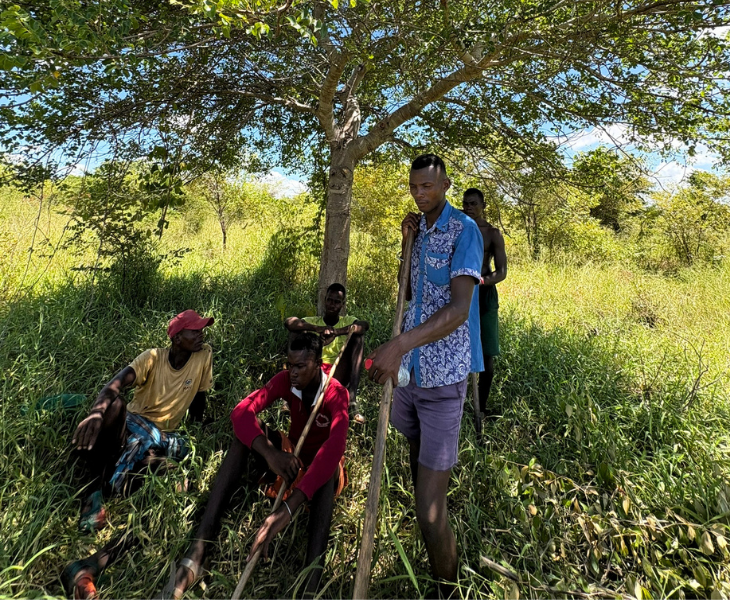
Above: Five of the six local men who helped dig test holes across the site, resting beneath the tree that will one day sit near the future admin office.
The Mahabo Agricultural Training School is being built in the Menabe region of western Madagascar, on a piece of land that took three sites and several years of quiet persistence to reach. Our team was on site in March, working slowly across the land, carrying out soil testing, structural investigation, and paying attention to what the site was already doing.
These moments rarely make for dramatic photographs, but they are the ones that determine whether what gets built will actually last. Our consulting engineer moved across the site point by point, running tests at each location while the community team dug, and our project lead walked alongside, reading the drainage, tracing where erosion was active, and asking what each particular piece of earth was going to ask of the design. What they found was an unexpectedly generous site, with Amarula trees, jujube fruit, and root vegetables already threading through soil that, on earlier visits, had looked like it had very little to offer.
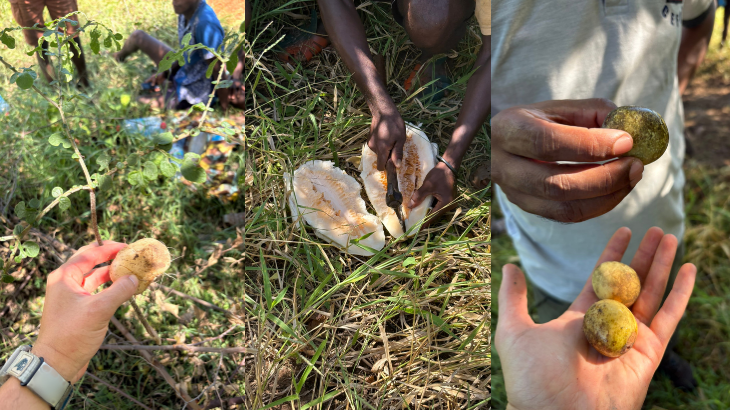

There is something worth sitting with in that image: a school not yet built, on land already quietly abundant, with a community already present and contributing to something that has not yet officially begun.
The project’s progress has not always followed a straight line. The first site was lost to a floodplain, and the second became complicated by a dispute over land authority, eventually leading the team to make the deliberate decision to pause all progress until there was something solid enough to move forward with. That kind of patience is not easy to sustain, and yet no one on the team ever quite felt like it was time to let go. Even at a complete halt, there remained a steady, unhurried conviction among the people who believed they were still supposed to be there, and slowly, things began to fall into place.

In March, there was a long exhale across the team as the building permit came through on the very day the drawings were submitted. The tender was formally issued, and five local contractors gathered in Antananarivo for the briefing meeting, asking sharp and specific questions that left the team with a quiet confidence that people are taking this work seriously. For a project with this much history, moving clearly in one direction is not something anyone is taking for granted.
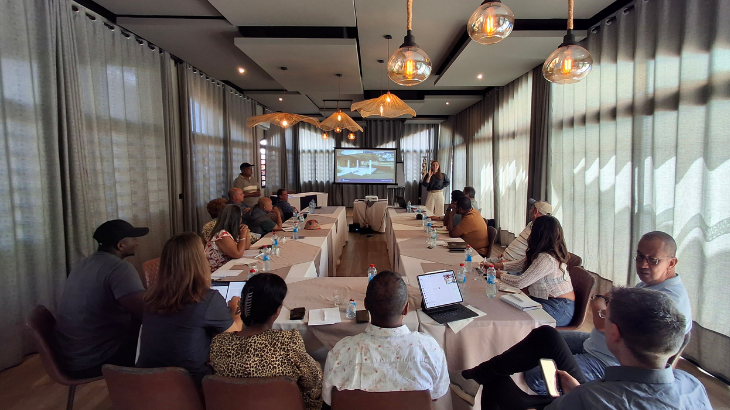
Above: Five local contractors gathered in Antananarivo for the project tender briefing in March.
There is still a long road ahead. Ground has not yet been broken, and tender results are still expected. The decisions that follow will shape the first impression this project makes on the surrounding community. For now, the team continues to prepare for what comes next.
Pray with us
- Discernment in choosing a contractor, someone who builds with skill, works within budget, and understands that this project is about more than the building.
- Language and relationship, the team is growing in Malagasy, and that growth is already shaping trust on the ground. Pray for it to continue.
- In thanksgiving for the permit, for the land, for the men who showed up again without being asked, and for a faithfulness in this project that has never quite felt like ours to claim.
- For Chamonix and Cam Stuart as they prepare to relocate to Madagascar this Sunday, the 24 May, for grace, wisdom, and steadiness as Chamonix steps into leading this next season of the project.
Keep an eye out for Part Two later this year, when the ground breaks.
