
Section 2 of EMI's Creation Care Whitepaper
God designed people as fundamentally relational beings. This extends not only to our relationships with God and with other people, but also to our relationships with the rest of creation. Some of these relationships are obvious: we cannot survive unless we are nourished by the non-human creation through healthy food, clean air, and pure water. Some relationships are less obvious, but no less important: studies have demonstrated that exposure to intact natural systems increases subjective wellbeing (e.g. Russell et al., 2012). Especially in our roles as designers of the built environment, we acknowledge that a “sense of place” is an important part of one’s lived experience, and one’s relationship with a place is tied up in one’s relationships with the creatures and natural processes that exist at that place.
As we seek to witness restoration of both people and the world within the vision of EMI, we also seek restoration of the relationships between people and the world. The globally dominant culture has fractured this relationship by conceiving of the world as primarily a store of material resources. A restored relationship with the world includes the ability of a person to sustain him or herself from the stores of nature, but also the ability of that person to live in peace with and support the world’s flourishing.2
The built environment is a primary shaper of the way that people interact with the world around them. Buildings and infrastructure can promote separation from the world, resulting in the dominance of human-constructed artifacts. They can also promote connection with the world by providing opportunities for mutually beneficial interactions.
In contrast to ‘rewilding’ as the only approach to restoring healthy natural systems, well-managed human interventions have been shown to result in mutually beneficial outcomes. Here are a few ways that EMI’s activities across various sectors of human-designed environments can either contribute further harm or begin to heal our fractured relationships with the natural world:
Shelter and Structures
Conventional construction practices often depend on unsustainably-sourced or carbon-intensive3 and synthetic materials that contribute to climate instability, chemical pollution and habitat loss. For the last 100 years human expansion and settlement patterns have also become increasingly less densified, resulting in disconnected communities and energy-consuming transportation infrastructure.
A healing response emerges through spaces and structures that foster life-giving relationships, carefully considered land-use planning, bioclimatic design, and low-impact, earth-based materials that support ecological and occupant health. Considering aspects of recyclability, durability and resilience in a full life-cycle materials analysis can also help to ensure both safety and sustainability for structures.
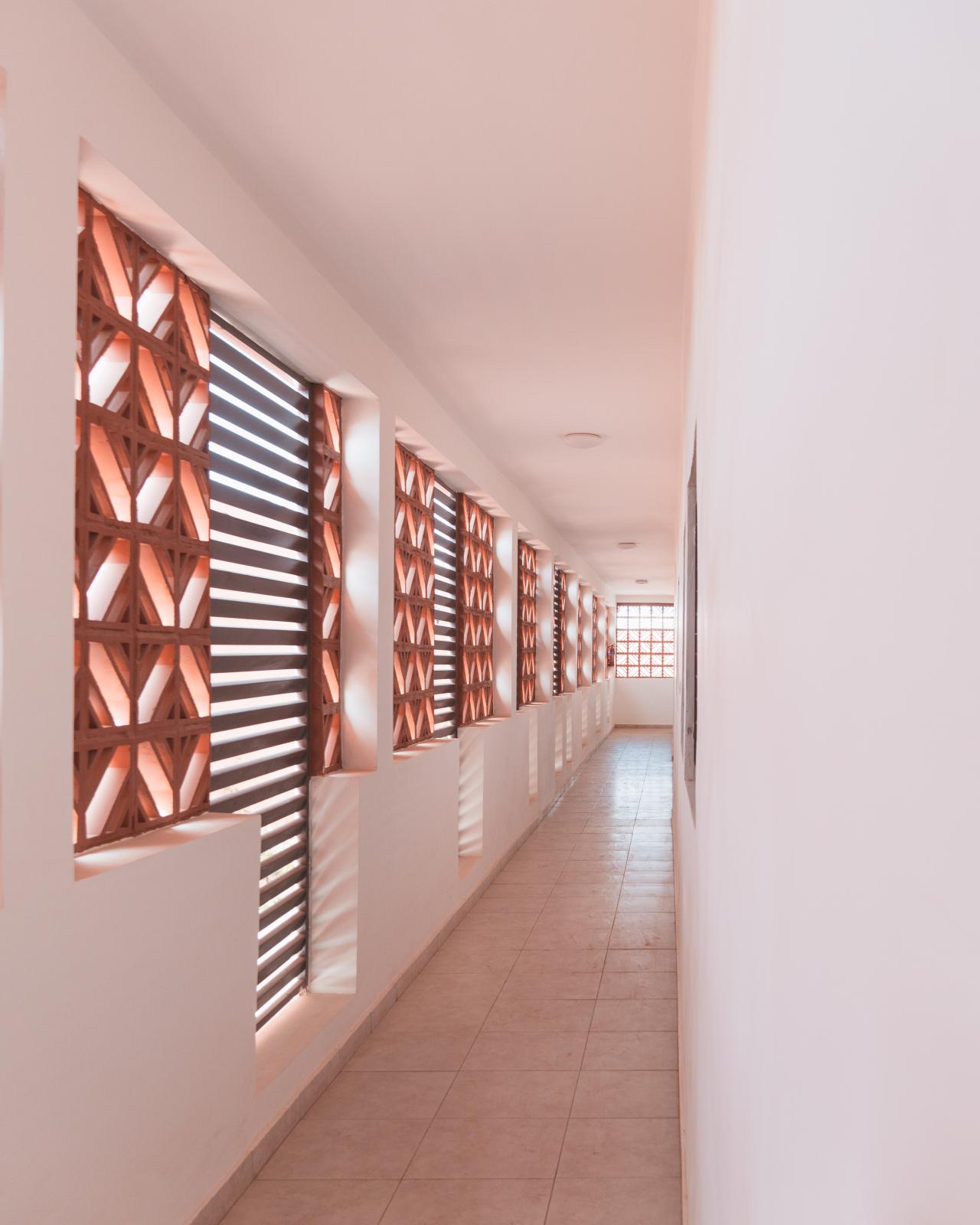
Fig 02. - Overlooking a central garden courtyard, locally-sourced clay ventilation blocks provide sun-shading and passive cooling for interior spaces within SIL’s Bible Translation Center, designed by EMI in Senegal (Photo by Matthew Coffey)
Landscape
Landscape design that removes native vegetation, replaces diverse plant life with monoculture ground covers, or uses chemically-intensive practices can degrade ecosystems, decrease emissions capture, and disrupt nutrient cycles. When hardscape dominates green space, it worsens urban heat islands and reduces rainwater absorption, contributing to land-system change and climate vulnerability.
In contrast, restorative landscape design can heal both land and community. Incorporating native plants, pollinator gardens, shade trees, and green infrastructure (e.g., bioswales, rain gardens) supports biodiversity, bioclimatic comfort and water retention. The contemporary theory of “reconciliation ecology” envisions creating habitat for non-humans in places where humans regularly live, work, and play (Rosenzweig, 2003).
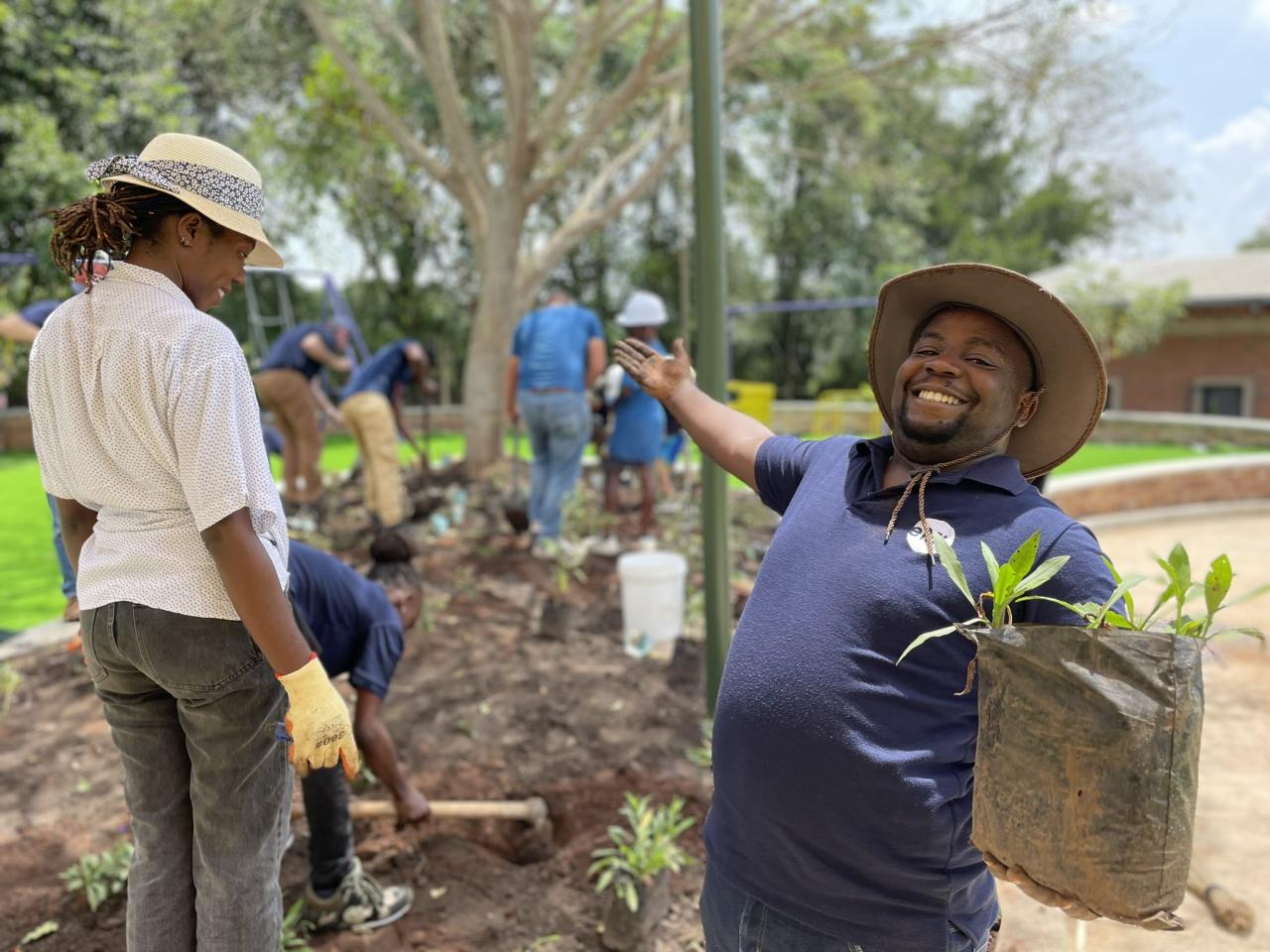
Fig 03. - EMI Uganda staff joined together to establish plantings around the Gem Playground – a uniquely designed space that brings children with special needs into an outdoor recreational environment. (Photo by Adam Gordon)
Food Systems
With food production linked to some of the largest drivers of environmental change, built interventions must also seek to address agricultural solutions whenever possible. Land-use planning that encroaches on arable land or promotes destructive agricultural practices can threaten biosphere integrity.
Healing occurs when sites incorporate regenerative agriculture, sustainable irrigation, edible landscapes, composting systems, natural seed banks, or community gardens that reinforce local food sovereignty and reduce pressure on land systems and natural resources.
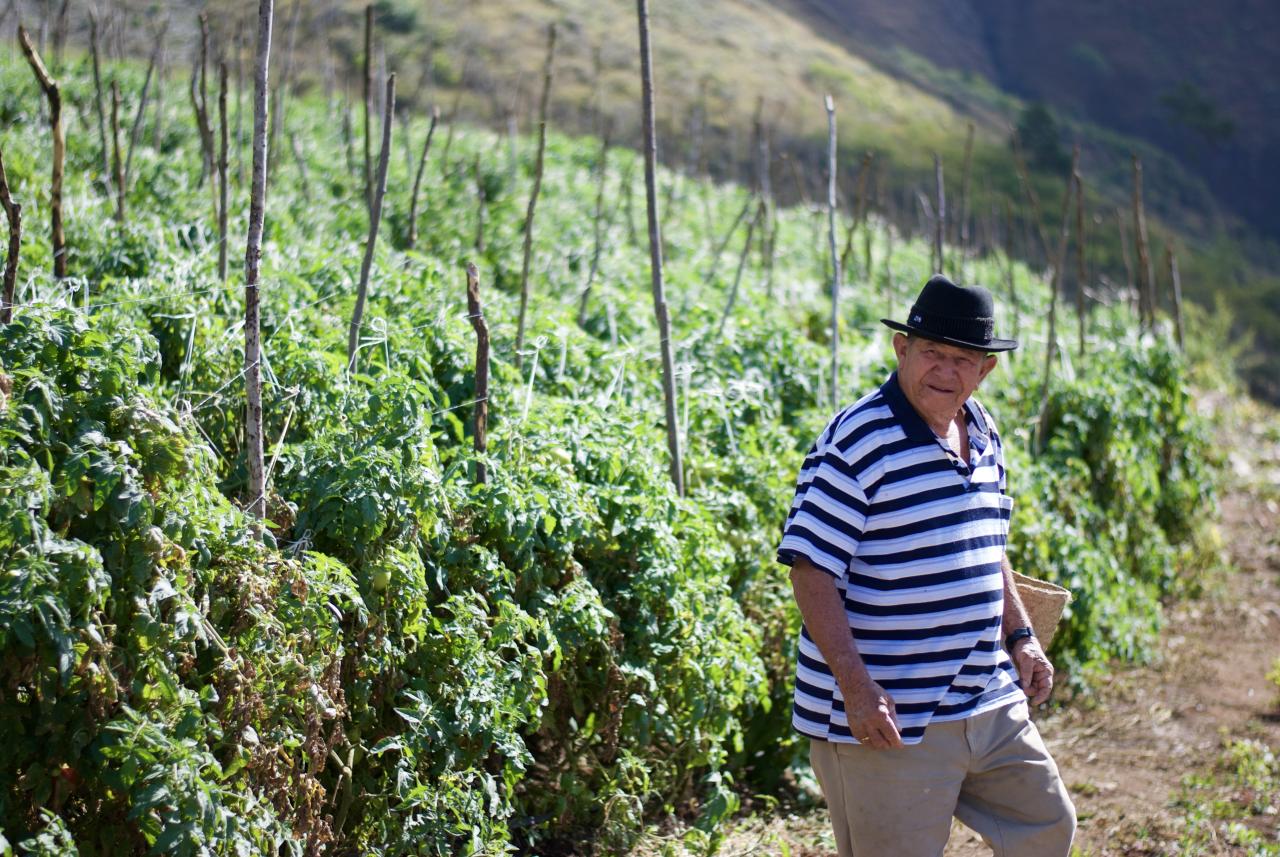
Fig 04. - EMI assisted with rehabilitation design, installation, and operational training to improve the efficiency of irrigation systems in Guayabal, Colombia – helping the people of this community to improve their livelihoods through sustainable agriculture. (Photo by Jason Chandler)
Water
Water scarcity can be attributed to physical scarcity, when there is a shortage of water because of local ecological conditions; and/or economic scarcity, when there is inadequate water infrastructure. Built interventions that result in excessive groundwater extraction, impervious surfaces, and untreated wastewater can strain freshwater systems, reduce groundwater recharge, and pollute water bodies.
Domestic water consumption has contributed to large increases in water demand over the past 50 years, thus EMI’s design of municipal and residential systems in standard building services or through WASH community efforts can have significant impact. Healing comes through best-practice consumptive patterns, sustainable treatment methods and integrated water-sensitive design. This could include rainwater harvesting, greywater reuse, and constructed wetlands that mimic natural systems, helping communities stay within sustainable hydrological cycles and restoring watersheds altered by land conversion.
Energy
High energy-consuming buildings and infrastructure can contribute to unsustainable operational expenses while increasing emissions and particulate pollution (aerosol loading). In contrast, designing for energy efficiency through passive systems and cleaner energy like solar can reduce these impacts.
Healing emerges when EMI is able to monitor and advise on best-practice energy use and align energy systems with sustainability measures. Best-practice design can decrease reliance on emissions-intensive sources and enable resilient access to energy across all socio-economic levels through systems like microgrids and energy cooperatives. Access to energy can also empower other resource-reducing actions: for example, a mechanical fan could dramatically increase the energy efficiency of a wood-burning stove, and an electronically-controlled irrigation system could reduce water losses and improve crop yields.
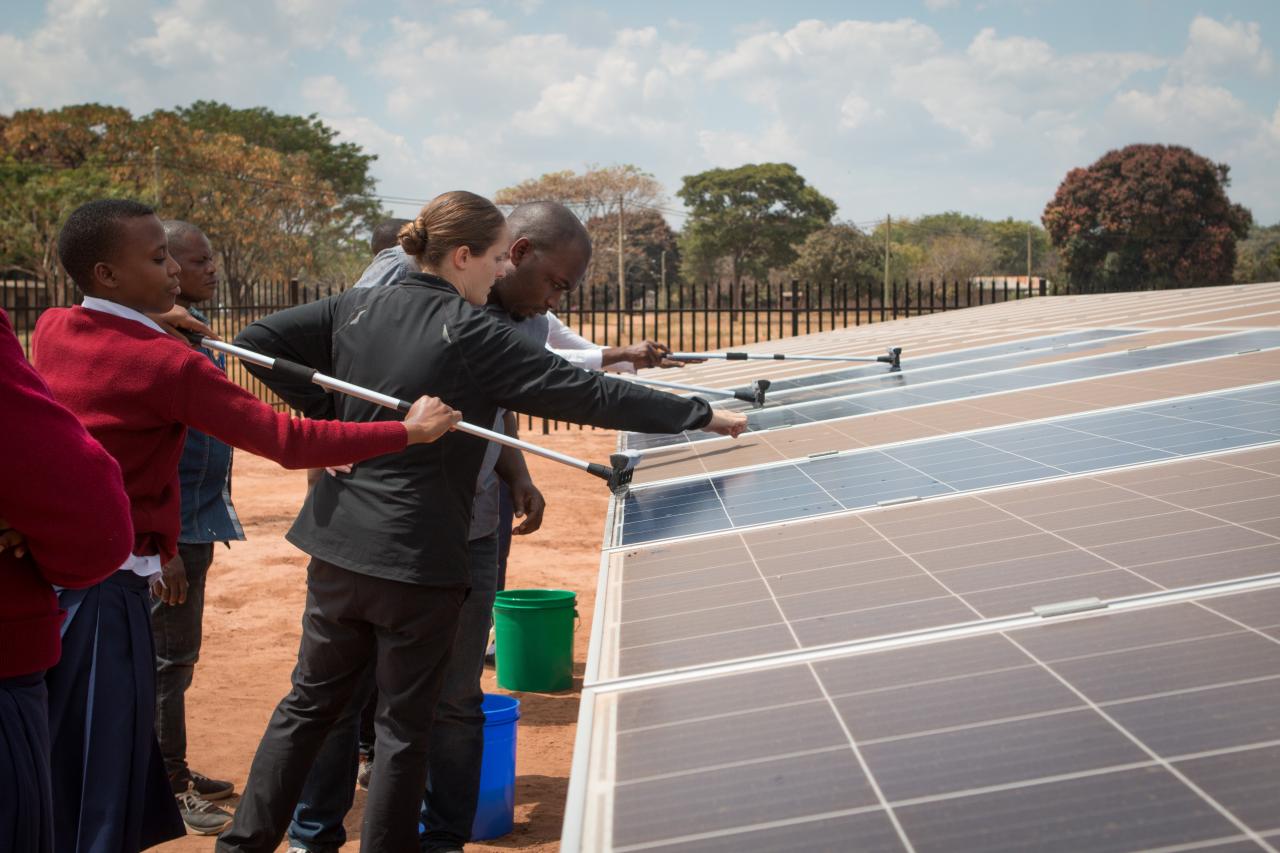
Fig 05. – Students learning how to clean and maintain solar panels from an EMI-designed micro-grid system for a campus in Tanzania (Photo by Jenni Keiter)
Health and Sanitation
Pollutants in air, water, and soil all negatively affect human health and the health of surrounding ecosystems. Practices such as the improper incineration of rubbish, poorly designed wastewater infrastructure, and the use of toxic materials in construction all have the potential to harm both inhabitants and neighbors of EMI projects.
Healing designs treat waste as a resource—e.g., ecological sanitation that returns nutrients to the soil—thus protecting biosphere health, conserving freshwater, and supporting nutrient cycling. Within building and site design, incorporating bioclimatic and biophilic principles such as daylighting, ventilation and healing gardens through evidence-based design can lead to proven health and developmental benefits. (Jimenez, et.al., 2021)
Disaster Resilience
Built infrastructure that ignores ecological systems—such as clearing mangroves or modifying wetlands—reduces natural buffers against disasters and worsens vulnerability to climate-related extremes.
Conversely, a well-designed environment is the primary way that humans can withstand events that would otherwise cause natural disasters. Healing interventions reinforce nature-based solutions for climate resilience: flood-tolerant site planning, reforestation, and adaptive design that partners with—not against—natural systems, helping communities stay resilient as climate and environmental impacts intensify.
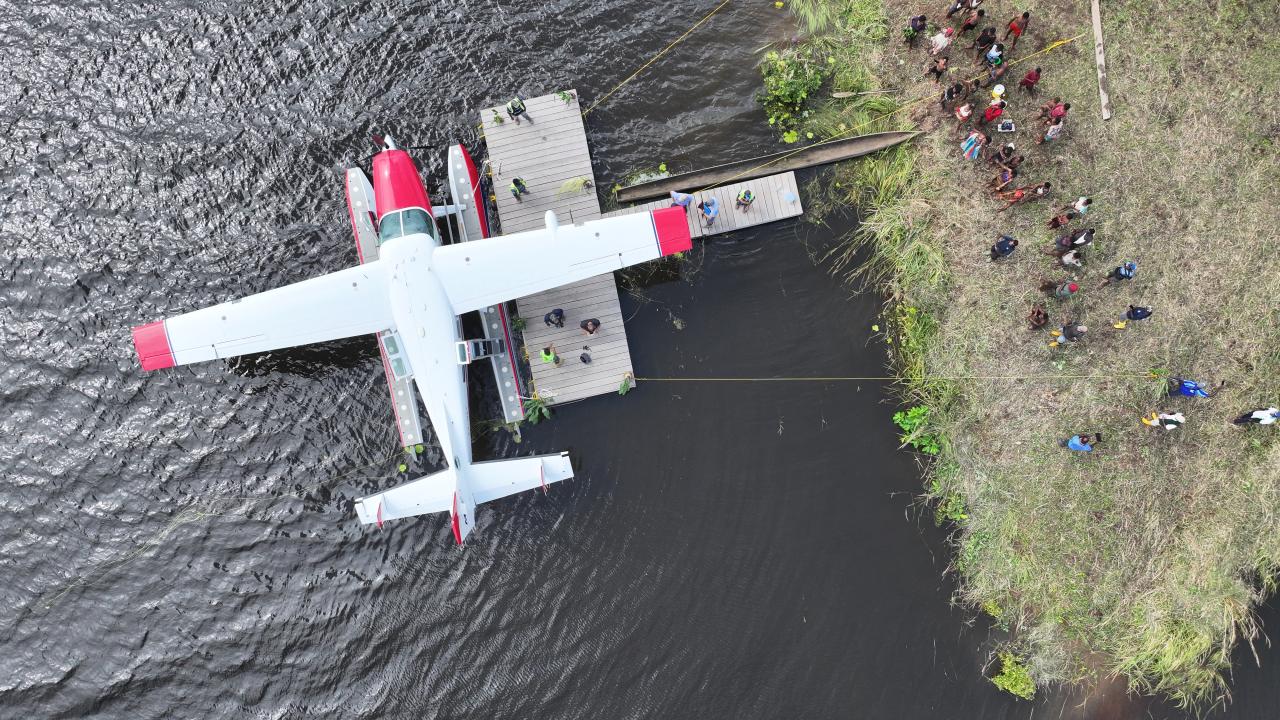
Fig 06. – Despite having recently experienced a 50-yr flood event, MAF is able to land their amphibious aircraft in Balimo, PNG with EMI-designed docking infrastructure that can adapt to changing climate conditions - maintaining a lifeline to this isolated community. (Photo by Terry Fahey)
Operational Alignment
These intersections also go beyond our design and construction practices, encompassing the sustainability of our internal operations. By responsibly managing our office resources and reducing the ecological footprint of our travel and project activities, we can demonstrate a posture of stewardship to our ministry clients and relate to the next generation of young professionals seeking coherence between their values and the regular rhythms of their work.
These types of healing interventions define the opportunities and the obligations of the design and construction industry, but what about our responsibilities as Christians in light of the gospel? In the next section, we’ll view the alignment of our faith and values with the care of creation.
Unifying Statement
As designers of the built environment, the work of EMI intersects with natural systems and processes across every discipline and sector in which we provide services. Our choices in these intersections are never neutral – they either harm or heal relationships between people and the natural world.
Works Cited/Additional Resources
Jimenez, Marcia P.,DeVille, Nicole V., Elliot, Elise G., Schiff, Jessica E., Wilt, Grete E., Hart, Jamie E., James, Peter (2021) Associations between Nature Exposure and Health: A Review of the Evidence. Greenspaces and Health: Measures and Methods 18(9), 4790; https://doi.org/10.3390/ijerph18094790
Kim, J., & Kaplan, R. (2004). Physical and psychological factors in sense of community: New urbanist Kentlands and nearby orchard village. Environment and Behavior, 36(3), 313–340. https://doi.org/10.1177/0013916503260236
Loder, A. (2014). “There’s a meadow outside my workplace”: A phenomenological exploration of aesthetics and green roofs in Chicago and Toronto. Landscape and Urban Planning, 126, 94–106. https://doi.org/10.1016/j.landurbplan.2014.01.008
Rosenzweig, M. L. (2003). Win-Win Ecology: How the Earth’s Species can Survive in the Midst of Human Enterprise. Oxford University Press.
Russell, R., Guerry, A. D., Balvanera, P., Gould, R. K., Basurto, X., Chan, K. M. a., Klain, S., Levine, J., & Tam, J. (2012). Humans and Nature: How Knowing and Experiencing Nature Affect Well-Being. Annual Review of Environment and Resources, 38(1). https://doi.org/10.1146/annurev-environ-012312-110838
United Nations Environment Programme. (2025, March). Not just another brick in the wall: Global Status Report for Buildings and Construction 2024/2025. United Nations Environment Programme. https://doi.org/10.59117/20.500.11822/47214
Weathering Risk, AGRICA, & B_EPICC. (2023, March). Climate Risk Profile for Eastern Africa. Weathering Risk. https://weatheringrisk.org/sites/default/files/document/Climate-Risk-Profile_Eastern-Africa.pdf
Download the Full Whitepaper:
Related articles


Your investment in EMI is a catalyst for change.
Community transformation starts with design. And design needs a strong foundation. Your donation to the EMI Fund supports everything we do.
EMI Tech is looking for contributors – write to publications@emiworld.org with your topic and article outline.