
Section 3 of EMI's Creation Care Whitepaper
3.1 Historical Responses
As Christians, we share a belief in scripture’s definition of environmental degradation resulting from humanity’s sin, which fractured the original harmony between God, people, and creation. Yet, our response to the created world has spanned a range of views across the history of the church, reflecting broader theological, cultural, and philosophical shifts:
- Early Church (1st–5th centuries): Many early Christians saw creation as good, reflecting the Genesis text, but emphasized the spiritual over the material. Influences from Platonism led some to view the physical world as inferior to the spiritual realm.
- Medieval Period (5th–15th centuries): Thinkers like Augustine and Thomas Aquinas affirmed the goodness of creation as God's handiwork. Creation was seen as a reflection of divine order and a means to understand God, explored through reason and observation of the natural world.
- Reformation (16th century): Reformers such as Martin Luther and John Calvin upheld the value of creation, emphasizing its role in God's providence and glory. However, the focus remained on human redemption rather than environmental stewardship.
- Enlightenment and Industrial Era (17th–19th centuries): During this time, many Christians embraced scientific progress and dominion theology—interpreting the Genesis text as a license to exploit nature for human benefit. The world was increasingly seen as a resource.
While many of these historical Christian perspectives respond to aspects of biblical truth, they’ve also been subject to common distortions, some of which remain within our current worldviews.
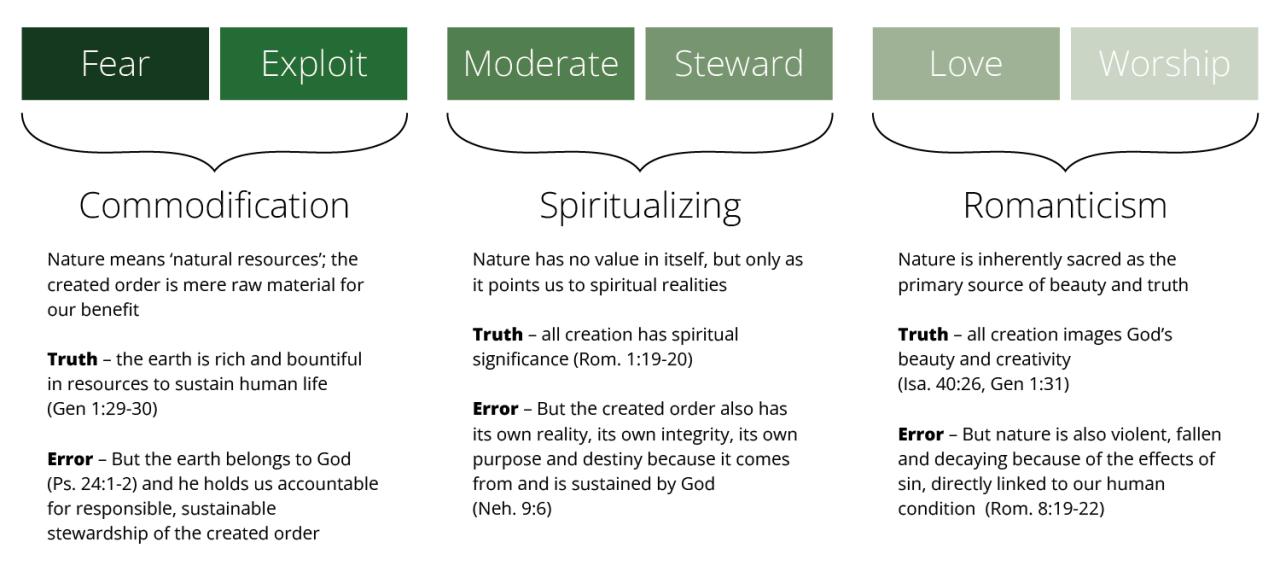
Figure 07. - Truth and (corrective) error within our various responses to the created world (Snyder, 2007)
From the 20th Century to the present, a growing awareness of ecological decline has led many Christians to examine biblical teachings that recognize the intrinsic value of the created world and emphasize an integrated response of caring for all of creation.
Developing a robust theology of creation care through the lenses of historical Christian thought helps us to avoid common distortions and interpret creation passages faithfully within the full biblical storyline of creation, fall, redemption and restoration.
Unifying Statement:
The earth, though richly endowed to sustain life, is God's possession, and as Christians we are entrusted with its wise and responsible care. It reveals God's power and beauty, and participates in His divine purpose, yet it also bears the marks of human sin, suffering the consequences of a fallen world as it longs for restoration.
The Mission of Restoration
A biblically grounded view of mission is drawn to God’s purpose for the renewal of all creation, beginning with the firstfruits of Christ’s resurrection, empowered by the Spirit, and moving towards a final fulfilment where all things are made new (Romans 8).
In the Apostle Paul’s writings, the world - not just the church or the individual soul, is the theatre of God’s redemptive work. The cosmic renewal of all things is the fruit of our salvation, as creation itself shares in the freedom and glory revealed in the children of God. The healing of creation is God’s saving work, not our own achievement; yet, as spirit-led believers united with Christ, we participate through a faithful and hopeful witness.
This anticipation of holistic renewal begins to shape a missional response to the created world:
- Our response to brokenness: The exercise of dominion in the larger biblical text includes the active promotion of harmony and peace (shalom) not only between humankind and nature, but also between people, and centrally between people and God. Ecological problems cannot easily be separated from other aspects of our broken world, including other broken relationships (Drake, 1993).
- Our response to the most vulnerable: As followers of Jesus, we love others by responding to the suffering of those directly affected by the results of sin and the degradation of God’s creation. This includes being aware of the impact on the poor from both the economic cost of responding to a changing natural environment and the adverse consequences of those changes.
- Our response to natural systems: The true measure of our efforts to care for the created world lies in the health and integrity of the earth’s integrated ecosystems—whether they function as God intended. Rather than focusing on isolated solutions, a unified approach seeks to honour the full web of relationships that sustain life – human and non-human (WEA Sustainability Center, 2025).
Integrating a missional response within the various sectors of EMI’s work (previously discussed in section 2.0) becomes an embodied witness of the built environment to visibly reflect the transformational values of the Kingdom:
- Shelter and Structures as spaces of safety, belonging, reconnection and healing
- Landscaping that demonstrates reconciliation between the built and natural environments
- Food Systems as expressions of God’s abundant provision
- Water as a shared responsibility for a precious gift
- Energy that brings people together and empowers work and service
- Health and Sanitation that affirms the dignity and value of people made in God’s image
- Disaster Resilience that’s rooted in hope and justice for the vulnerable
Unifying Statement:
Christian mission participates, by the Spirit and in union with Christ, in God’s restoring work for all creation—anticipating his promised renewal through faithful witness that seeks healing, justice, and flourishing across human communities, natural systems, and the built environment.
3.3 Unified Calls to Action
A growing number of unified calls to creation care have emerged from the global Church in recent decades. These declarations arise from broad consensus among evangelical leaders, missional networks, and Christian development organizations. Foundational statements such as the Cape Town Commitment (2010), the Jamaica Call to Action (2012), and the recent Korean Invitation (2024) affirm that caring for God’s creation is not a peripheral concern but a gospel issue rooted in the mission of God.
The Cape Town Commitment (a foundational document from the Lausanne movement) asserts that creation care is “a gospel issue within the Lordship of Christ” and calls for repentance from environmental exploitation and indifference. The Jamaica Call to Action echoes this urgency, highlighting how environmental degradation harms the poor and urging the Church to integrate creation care into its mission and witness. The Korean Invitation builds on these calls by naming creation care as an expression of whole-life discipleship, urging contextual action, global collaboration, and practical integration into church life.
These appeals are supported by thoughtful theological and missional frameworks, such as OMF International’s Theological Basis for Creation Care, or the NAE’s Loving the Least of These, both of which anchor the call to care for creation in the nature and mission of God Himself.
Together, these voices offer a unified and biblically grounded call to action. They affirm that creation care is not only a response to current ecological realities or a focus across the design industry but a joyful act of obedience and a faithful witness to the hope of Christ.
3.4 Core Commonalities with our Statement of Faith, Mission, Vision, and Core Values
The global Church’s call to creation care finds deep resonance within EMI’s foundational documents and identity. Our Statement of Faith affirms that God is the Creator of all things and that humanity—made in His image—has been entrusted with the care of creation. The redemptive work of Christ is cosmic in scope, pointing not only to the salvation of individuals but also to the restoration of all things (Colossians 1:19–20). This theological foundation makes creation care a natural outworking of our faith.
EMI’s Mission—to develop people, design structures, and construct facilities which serve communities and the Church—reflects a commitment to both people and place. Our work exists at the intersection of physical environments and spiritual transformation. Serving vulnerable communities often means addressing issues of environmental degradation, public health, and resilience—concerns that are deeply connected to creation stewardship.
Our Vision to see “people restored by God and the world restored through design” encapsulates a holistic understanding of redemption. We affirm that God's restorative work includes both the spiritual and the physical, and our design efforts are part of this wider redemptive story. The environments we shape and steward should reflect God's justice, beauty, and care for all creation.
This alignment is further expressed in EMI’s Core Values:
- Design: We pursue culturally appropriate, sustainable, and transformational design that honours both people and the places they inhabit.
- Discipleship: We follow Jesus in all areas of life, recognizing that caring for creation is part of living as faithful stewards and image-bearers of God.
- Diversity: We work across cultures in mutual respect and partnership with local professionals, seeking to understand and support local communities whose well-being is often directly tied to the health of their environment.
These values were reaffirmed through EMI’s internal 2024 survey, which showed strong theological and practical support for creation care among staff. Respondents expressed a desire for more tools and resources, increased collaboration, and stronger accountability to help them live out this commitment.
Unifying Statement:
EMI’s commitment to creation care flows from our shared theology, mission, and values. We are not adding a new emphasis but living more fully into who we already are—participants in God’s redemptive work for both people and places, grounded in the hope of Christ and empowered by His Spirit.
Works Cited
Drane, J,(1993). Defining a Biblical Theology of Creation, Transformation, Volume 10, Issue 2, pages 7–11
Lausanne Movement. The Cape Town Commitment: A Confession of Faith, A Call to Action. Resulting from the Third Lausanne Congress on World Evangelization, Cape Town, South Africa, 16–25 October 2010 https://lausanne.org/wp-content/uploads/2021/10/The-Cape-Town-Commitment-%E2%80%93-Pages-20-09-2021.pdf?utm_source=chatgpt.com
Lausanne Movement & World Evangelical Alliance. Creation Care and the Gospel: Jamaica Call to Action. Outcome of the Global Consultation on Creation Care and the Gospel, St Ann, Jamaica, 29 October–2 November 2012 https://lausanne.org/gathering/global-consultation-on-creation-care-and-the-gospel?utm_source=chatgpt.com
Lausanne Movement / WEA Creation Care Network. Good News for All the Earth – The Korean Invitation to Respond to the Gospel. Drafted at the Global Creation Care Forum, Gonjiam, South Korea, 28 September–2 October 2024 https://lausanne.org/statement/good-news-for-all-the-earth?utm_source=chatgpt.com
Synder, H. (2007). Salvation means Creation Healed: Creation, Cross, Kingdom and Mission. The Asbury Journal, Vol. 62, No. 1, 2007, pp. 9–47
Wonsuk, Ma (2007). The Spirit of God in Creation: Lessons for Christian Mission, Transformation Volume 24:3 & 4, pp. 222–230. https://place.asburyseminary.edu/asburyjournal/vol62/iss1/3/?utm_source=chatgpt.com
World Evangelical Alliance Sustainability Center (2025) – discussion on environmental sustainability https://wea-sc.org/en/wea-and-sustainability
Download the Full Whitepaper:
Related articles


Your investment in EMI is a catalyst for change.
Community transformation starts with design. And design needs a strong foundation. Your donation to the EMI Fund supports everything we do.
EMI Tech is looking for contributors – write to publications@emiworld.org with your topic and article outline.